




Selecting a grass pellet machine manufacturer is an important decision because biomass pellet production involves much more than purchasing a single piece of equipment. The supplier needs to understand how the raw material behaves, how the individual machines interact, and how the production system should be configured for reliable operation.
This becomes particularly important when the feedstock is miscanthus. A miscanthus pellet mill needs to handle a fibrous material that can behave differently from wood sawdust or conventional feed ingredients. The equipment design therefore deserves close attention.
Technical Experience Matters
A manufacturer with experience across several biomass applications may have a broader understanding of material preparation and pelleting. Miscanthus, grass, straw, sawdust, and agricultural residues each have different characteristics, but many projects share common process requirements.
The supplier should be able to discuss particle size, moisture, feeding behavior, compression, cooling, and screening rather than focusing exclusively on motor power and production capacity.
A technical conversation before purchasing can reveal whether a manufacturer understands the actual production challenge. If the supplier asks about raw material moisture, seasonal availability, target pellet size, and intended application, it indicates that equipment selection is being approached as an engineering problem.
Look at Machine Construction
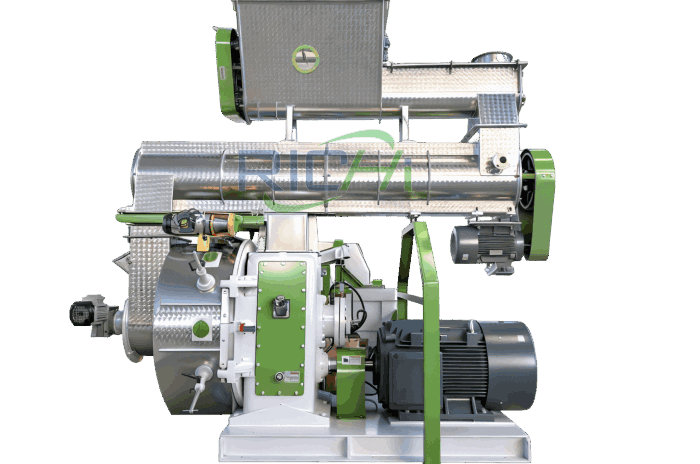
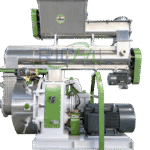
The structure of the pellet mill deserves careful inspection. A stable transmission system is important because the main drive must deliver power consistently under heavy compression loads.
Bearings and oil seals also influence operating reliability. Properly selected components can help reduce friction and protect the transmission system during continuous operation.
Feeding is another critical point. Lightweight grass materials can be difficult to move consistently through conventional feeding arrangements. A suitable forced-feeding design can help maintain a stable flow into the pelleting chamber.
The ring die should also be selected according to the material and target product. Miscanthus contains tough fibers and mineral components, so wear resistance can become an important consideration for commercial production.
Ask About Engineering, Not Just Equipment
A strong supplier should be able to discuss the production line around the pellet mill. If raw material moisture is high, drying may be required. If stalks are long, crushing becomes important. If finished pellets are hot after compression, cooling needs to be included before storage.
This integrated perspective separates an equipment manufacturer from a simple machine reseller.
The manufacturer should also be able to explain the relationship between capacity and supporting equipment. A high-output pelletizer cannot deliver its intended production if the crusher, dryer, feeder, conveyor, or cooler creates a bottleneck.
For buyers comparing potential suppliers, more technical documentation can often be more useful than a longer list of marketing claims.
Global Experience Can Reduce Project Risk
Biomass projects are influenced by local conditions. Electricity standards, climate, factory layout, raw material availability, labor costs, and fuel prices can differ considerably between regions.
A manufacturer that has supplied equipment to multiple markets may be familiar with these practical differences. This can help when planning equipment layout, electrical configuration, installation procedures, and operator training.
After-Sales Support Is Part of the Equipment
Long-term support should be considered before signing an equipment contract. Pellet mills contain wear parts and moving components that require regular inspection and maintenance.
The supplier should provide appropriate technical documentation and guidance for common maintenance tasks. Spare-part availability is also important because unexpected downtime can be expensive in a commercial plant.
Remote technical support can be useful as well, particularly when a production line is operating in another country. Clear communication can help operators identify problems before they develop into major mechanical failures.
Selecting a Partner for Future Growth
The ideal manufacturer should be able to support the project beyond the initial machine. A small grass pellet operation may later expand its capacity, add another raw material, introduce automated packaging, or develop a complete biomass fuel plant.
This makes long-term engineering capability an important part of supplier selection. The goal is not simply to buy a pelletizer, but to establish a production system that can remain practical as the business develops.
For investors entering biomass pellet production, comparing manufacturers according to engineering capability, component quality, project experience, technical support, and customization ability can provide a much clearer basis for making the final decision.
view details: https://www.richimanufacture.com/grass-pellet-machine/