


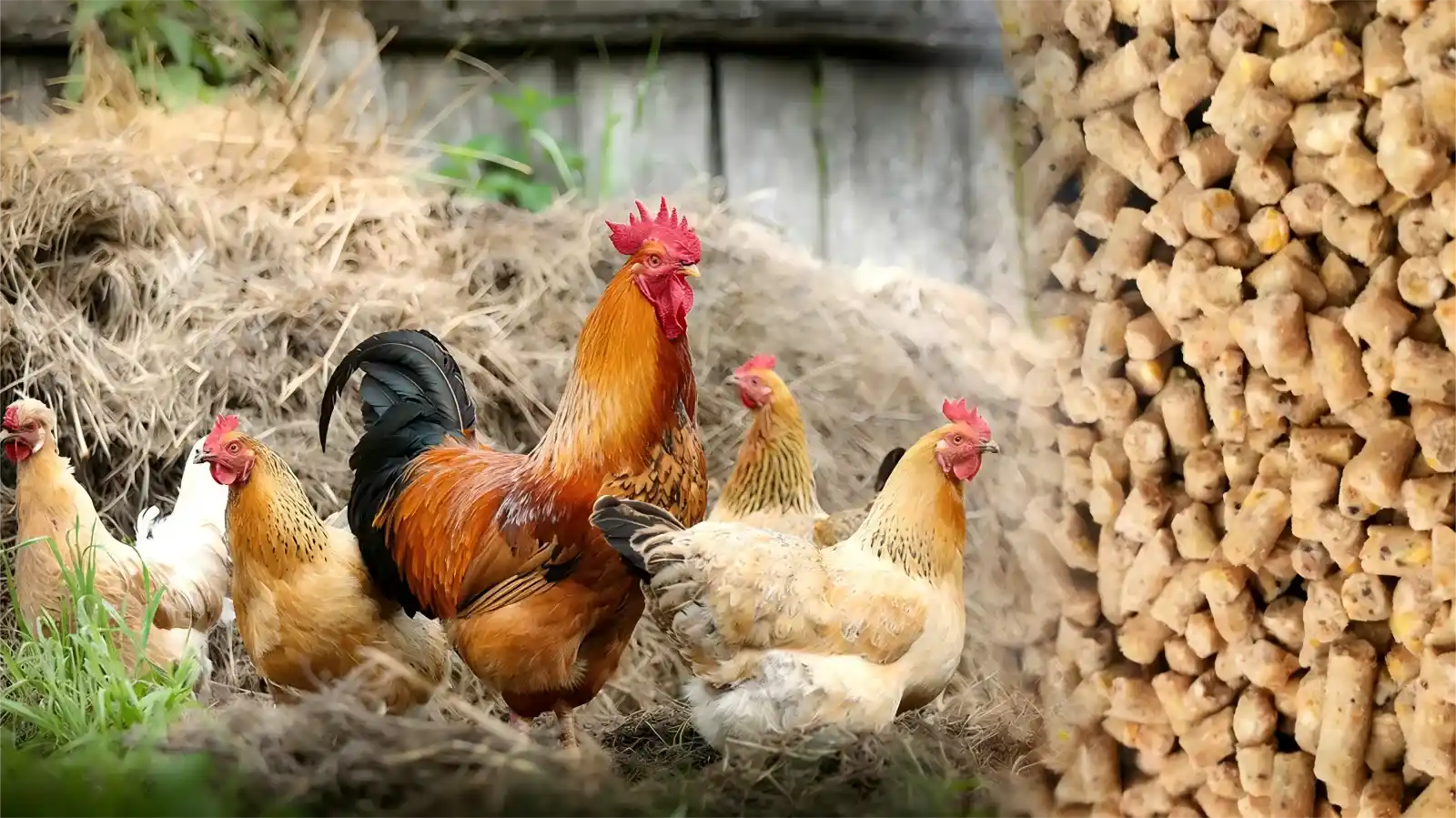
Chicken feed quality is influenced by many factors, from the quality of raw materials to the way the finished feed is processed and stored. A good feed formula alone cannot guarantee a high-quality product. If raw materials are inconsistent, grinding is unsuitable, mixing is uneven, or pellets are poorly conditioned and cooled, the final feed may not perform as expected.
For poultry producers and commercial feed manufacturers, feed quality is closely related to feed intake, growth, egg production, feed conversion, flock health, and production efficiency. Therefore, every stage of feed manufacturing should be carefully controlled.
Modern poultry feed factories use integrated processing systems to manage these factors. Equipment such as hammer mills, batching systems, mixers, conditioners, pellet mills, coolers, screens, conveyors, and packing machines all have a role in the final product.
When investors search for a chicken feed pellet machine for sale, they often focus on capacity, price, motor power, and pellet size. These are important considerations, but the pellet machine is only one part of the complete feed manufacturing process. The quality of chicken feed depends on the interaction between raw materials, formulation, processing parameters, equipment, and storage conditions.
This article explains the major factors that affect chicken feed quality and how a properly designed production system can help improve consistency.
1. Raw Material Quality
The first and most important factor affecting chicken feed quality is the quality of the raw materials.
Common chicken feed ingredients include:
- Corn
- Wheat
- Barley
- Sorghum
- Soybean meal
- Rapeseed meal
- Fish meal
- Wheat bran
- Rice bran
- Vegetable oil
- Fish oil
- Limestone
- Phosphate
- Salt
- Vitamins
- Minerals
- Amino acids
- Feed additives
Raw materials should be evaluated before entering production.
Important characteristics include:
- Moisture content
- Protein content
- Fat content
- Fiber content
- Freshness
- Particle size
- Contamination
- Storage condition
If raw materials are poor, the processing equipment cannot completely compensate for the problem.
For example, moldy grain can affect feed safety and quality. Excessively moist materials can create storage and processing problems.
Therefore, feed quality management should start at the raw material receiving stage.
2. Feed Formula
The feed formula has a direct influence on nutritional quality.
Chicken feed is formulated differently according to poultry type and production stage.
Typical products include:
- Broiler starter feed
- Broiler grower feed
- Broiler finisher feed
- Layer feed
- Chick feed
- Breeder feed
- Specialized poultry feed
The formula determines the balance of:
- Energy
- Protein
- Amino acids
- Fiber
- Fat
- Minerals
- Vitamins
- Other functional ingredients
A good formula should consider both animal requirements and available raw materials.
It should also consider ingredient digestibility, cost, processing characteristics, and product stability.
A nutritionally balanced formula is the foundation of feed quality, but it must also be compatible with the physical processing system.
3. Raw Material Moisture
Moisture affects almost every stage of feed production.
Raw materials with excessive moisture may be difficult to store and can increase the risk of mold growth.
Moisture also affects grinding performance and pellet formation.
During pelletizing, the material needs suitable moisture to form stable pellets. However, finished pellets should not retain excessive moisture because this can reduce storage stability.
The moisture content should therefore be monitored at different stages:
Raw materials → Feed mixture → Pelletizing → Cooling → Finished feed
Moisture control becomes particularly important in regions with high humidity.
4. Ingredient Storage Conditions
Storage conditions can change the quality of raw materials before they enter production.
Poor storage may expose ingredients to:
- Humidity
- Rain
- High temperatures
- Pests
- Mold
- Foreign materials
- Contamination
A good feed factory should use suitable silos, bins, warehouses, and liquid storage tanks.
The warehouse should be clean, dry, and properly ventilated.
A first-in, first-out inventory system can help prevent ingredients from remaining in storage for excessive periods.
Storage management is especially important for ingredients with high fat content because oxidation can affect feed quality.
5. Ingredient Particle Size
Particle size is another major factor.
Grinding affects mixing, digestion, pellet formation, and feed texture.
A hammer mill is commonly used in poultry feed production to reduce the particle size of grains and other ingredients.
If particles are too coarse, mixing may become less uniform and pellet quality may be affected.
If particles are excessively fine, the factory may experience:
- Higher energy consumption
- Increased dust
- Lower grinding efficiency
- Possible processing difficulties
Therefore, the goal is to achieve a suitable and consistent particle size rather than simply producing the finest possible powder.
The ideal particle size depends on the poultry type, feed formula, pellet size, and processing system.
6. Cleaning Efficiency
Raw materials can contain foreign materials such as stones, metal, sand, dust, and plant debris.
If these materials enter the production system, they can affect feed quality and damage equipment.
A feed factory may use:
- Vibrating screens
- Rotary screens
- Magnetic separators
- Destoners
- Dust collectors
The cleaning system should be matched to the characteristics of the raw materials.
Effective cleaning helps protect grinding equipment and downstream machines while reducing the risk of unwanted materials entering the finished feed.
7. Batching Accuracy
A feed formula is only useful if the ingredients are added accurately.
Incorrect batching can change the nutritional composition of the finished feed.
This is especially important for small-dose ingredients such as:
- Vitamins
- Minerals
- Amino acids
- Enzymes
- Premixes
- Functional additives
Manual weighing may be suitable for very small feed operations, but commercial factories generally benefit from automatic batching.
Automatic weighing systems can improve formula accuracy and make it easier to manage multiple feed recipes.
8. Mixing Uniformity
After batching, all ingredients must be evenly mixed.
A feed mixer should distribute ingredients throughout the batch.
Common industrial mixers include:
- Paddle mixers
- Ribbon mixers
- Horizontal mixers
Mixing quality can be affected by:
- Mixer design
- Batch size
- Filling ratio
- Mixing time
- Ingredient particle size
- Ingredient density
- Moisture
- Liquid addition
Under-mixing can result in nutrient variation.
Overfilling the mixer can also reduce mixing performance.
Therefore, the mixer should be operated according to its designed working capacity.
9. Liquid Ingredient Addition
Oil, molasses, and other liquid ingredients may be included in some poultry feed formulas.
These materials must be added evenly.
An industrial liquid addition system may include:
- Storage tank
- Pump
- Pipeline
- Flow meter
- Spray nozzles
- Control system
Uneven liquid distribution can create wet spots and dry spots in the mixture.
A properly designed spraying system can help distribute liquids more uniformly.
Liquid addition can also affect pellet quality because excessive oil may reduce binding during pelletizing.
Therefore, the amount and timing of liquid addition should be controlled according to the formula and processing conditions.
10. Conditioning Temperature
Conditioning is an important stage in pellet production.
Steam conditioning increases the temperature and moisture of the feed mixture before it enters the pellet mill.
Proper conditioning can improve:
- Pellet formation
- Pellet durability
- Production stability
- Throughput
- Binding
However, conditioning must be controlled carefully.
Insufficient conditioning may result in weak pellets and excessive fines.
Excessive heat or inappropriate processing conditions may affect certain heat-sensitive nutrients or additives.
The ideal conditions depend on the feed formula and pellet specifications.
11. Steam Quality
Not only the amount of steam matters. Steam quality also affects pelletizing performance.
Steam should be suitable for efficient heat and moisture transfer.
Poor steam conditions can lead to:
- Uneven conditioning
- Unstable pelletizing
- Excessive moisture
- Weak pellets
- Reduced production efficiency
The steam system should therefore be properly designed and maintained.
For larger feed factories, steam pressure and flow should be monitored continuously.
12. Pellet Mill Design
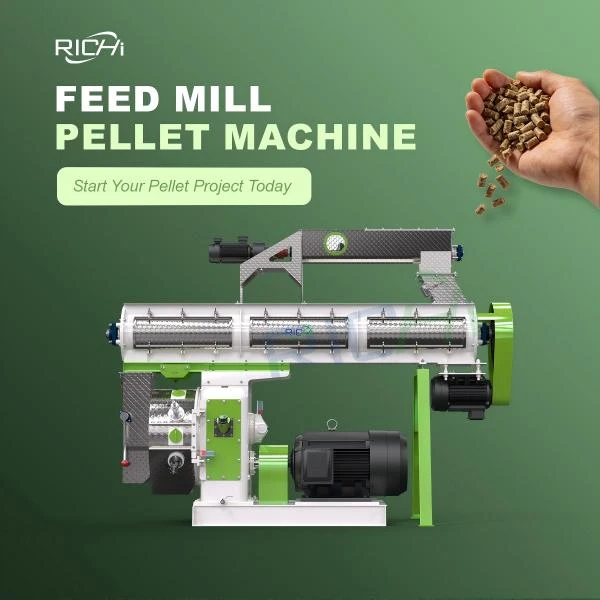
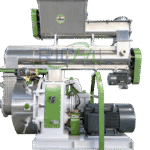
The pellet mill is a central piece of equipment in a pelletized chicken feed production line.
When customers search for a chicken feed pellet machine for sale, they should consider more than the purchase price.
Important specifications include:
- Production capacity
- Motor power
- Die diameter
- Die compression ratio
- Roller configuration
- Feed rate
- Operating stability
- Wear-part availability
- Maintenance requirements
The pellet mill should match the formula and required pellet size.
A machine designed for a particular capacity may not perform efficiently if it is consistently operated far above or below its intended range.
(Learn more:https://pelletisingmachine.com/chicken-feed-pellet-making-machine)
13. Die Selection
The die directly influences pellet diameter and compression.
Different poultry feed products may require different pellet sizes.
For example, feed for young chicks generally requires smaller particles than feed for mature birds.
The die should therefore be selected according to:
- Target pellet diameter
- Formula characteristics
- Raw material composition
- Required durability
- Production capacity
The compression ratio is also important.
An unsuitable die may cause high energy consumption, low production capacity, unstable pelletizing, or poor pellet quality.
14. Roller Condition
The rollers of the pellet mill apply pressure to the feed mixture.
Worn or incorrectly adjusted rollers can reduce pelletizing efficiency.
Operators should regularly inspect:
- Roller surface
- Roller gap
- Bearings
- Lubrication
- Wear
- Adjustment condition
If the rollers are severely worn, the machine may require more energy while producing lower-quality pellets.
Regular maintenance is therefore an important part of feed quality control.
15. Feed Rate Through the Pellet Mill
The amount of material entering the pellet mill also affects pellet quality.
If the feed rate is too high, the machine may become overloaded.
This can result in:
- Reduced pellet quality
- Lower production stability
- Increased energy consumption
- Motor overload
- More fines
If the feed rate is too low, the pellet mill may not operate efficiently.
A stable feed rate is therefore important for consistent production.
16. Pellet Diameter
Pellet size is an important physical characteristic of chicken feed.
Different poultry categories may require different pellet sizes.
Smaller birds generally require smaller feed particles, while older birds can consume larger pellets.
The pellet diameter should match the feeding stage and product specifications.
An appropriately sized pellet can improve handling and feeding efficiency.
17. Pellet Durability
Pellet durability refers to the ability of pellets to resist breakage during handling.
Low-durability pellets can break during:
- Cooling
- Screening
- Conveying
- Packaging
- Transportation
- Storage
This produces more fines.
Pellet durability is affected by:
- Formula
- Grinding
- Moisture
- Conditioning
- Die compression
- Roller adjustment
- Cooling
- Handling
Therefore, poor pellet durability should be investigated across the entire process rather than attributed to the pellet mill alone.
18. Cooling Efficiency
Fresh pellets leave the pellet mill at a relatively high temperature.
A cooler is needed to reduce the temperature and stabilize the pellets before screening and packaging.
Counterflow coolers are commonly used in industrial feed plants.
Poor cooling can cause:
- Condensation
- Moisture migration
- Mold growth
- Storage problems
- Pellet deformation
The cooler should be matched to the output of the pellet mill.
19. Screening Performance
Screening removes fines and oversized particles from the finished feed.
A good screening system helps produce a more uniform final product.
The screening process may separate:
- Qualified pellets
- Fine powder
- Broken pellets
- Oversized material
Excessive fines can indicate problems earlier in the process.
Possible causes include:
- Poor conditioning
- Incorrect moisture
- Unsuitable die
- Poor pellet durability
- Excessive mechanical impact
- Improper cooling
Therefore, screening results can also provide useful information for process optimization.
20. Conveying and Handling
Feed quality can deteriorate after pelletizing if the material is handled too aggressively.
High-impact transfer points can break pellets.
The conveying system should therefore be designed carefully.
Common equipment includes:
- Belt conveyors
- Screw conveyors
- Bucket elevators
- Drag conveyors
The number of unnecessary transfer points should be minimized.
Where possible, material should move smoothly with controlled drops.
This is especially important for small poultry pellets, which can be more vulnerable to breakage.
21. Packaging Quality
Packaging protects finished feed during storage and transportation.
Poor packaging can allow moisture or contamination to enter.
Packaging should provide:
- Accurate weighing
- Reliable sealing
- Suitable bag strength
- Moisture protection
- Product identification
Automatic packing systems can improve weighing accuracy and reduce manual errors.
Packaging should also be selected according to the target market and transportation conditions.
22. Finished Feed Storage
The quality of finished chicken feed can change during storage.
Finished pellets should be stored in a clean, dry, and well-ventilated warehouse.
Important factors include:
- Temperature
- Humidity
- Storage duration
- Pest control
- Packaging condition
- Warehouse cleanliness
If feed is packaged while it is still too warm, condensation may develop inside the bags.
Therefore, proper cooling before packaging is essential.
23. Feed Additives and Heat Sensitivity
Some feed additives can be sensitive to heat.
These may include certain:
- Vitamins
- Enzymes
- Probiotics
- Functional additives
When formulas contain heat-sensitive components, the production process should be designed to reduce unnecessary thermal exposure.
Some ingredients can be added after pelletizing through a coating or spraying system.
The appropriate method depends on the ingredient and formula.
24. Production Environment
The cleanliness of the production environment also affects feed quality.
The factory should maintain appropriate housekeeping in:
- Raw material areas
- Grinding areas
- Mixing areas
- Pelletizing areas
- Packaging areas
- Finished-product warehouses
Dust and spilled materials should be removed regularly.
Poor housekeeping can increase the risk of contamination and pest problems.
25. Equipment Maintenance
Equipment condition has a direct relationship with production consistency.
Important machines require regular maintenance.
For hammer mills, operators should inspect:
- Hammers
- Screens
- Bearings
- Rotor
- Motor
For pellet mills, operators should inspect:
- Die
- Rollers
- Bearings
- Lubrication system
- Feeder
- Main drive
For coolers and screens, operators should inspect:
- Fans
- Motors
- Screens
- Bearings
- Airflow system
Preventive maintenance helps avoid unexpected breakdowns and unstable production.
26. Operator Skill
Even advanced machinery cannot guarantee consistent feed quality without trained operators.
Operators should understand how different process parameters affect the finished product.
They should know how to identify:
- Weak pellets
- Excessive fines
- Abnormal machine noise
- Motor overload
- Uneven mixing
- Excessive moisture
- Cooling problems
Training should cover normal operation, adjustment, cleaning, maintenance, troubleshooting, and safety.
27. Automation Level
Automation can improve consistency by reducing manual operation.
A modern poultry feed factory may automate:
- Raw material conveying
- Batching
- Mixing
- Steam conditioning
- Pelletizing
- Cooling
- Screening
- Packing
A centralized control system can monitor process parameters and equipment status.
It can also store multiple feed formulas.
However, automation should match the size and requirements of the factory.
A small feed mill may not need the same level of automation as a large commercial poultry feed plant.
28. Dust Control
Dust is generated during grinding, batching, mixing, conveying, screening, and packaging.
A dust collection system can help control airborne feed particles.
It can also:
- Reduce material loss
- Improve workshop cleanliness
- Protect equipment
- Improve working conditions
- Support safer production
Dust collectors should be installed at major dust-generating points according to the plant design.
29. Production Capacity Matching
The equipment capacities throughout the production line should be properly matched.
For example:
Grinding Capacity → Batching Capacity → Mixing Capacity → Pelletizing Capacity → Cooling Capacity → Screening Capacity → Packing Capacity
If one section is significantly smaller than the others, it may become a bottleneck.
For example, purchasing a high-capacity pellet mill while using an undersized hammer mill may prevent the plant from reaching its expected output.
A complete engineering design should therefore balance the capacities of all major sections.
30. Why Equipment Selection Matters When Buying a Pellet Machine
When searching for a chicken feed pellet machine for sale, buyers should evaluate the machine in relation to the complete feed manufacturing process.
Important questions include:
- What is the actual capacity?
- What pellet sizes can it produce?
- What formulas can it process?
- What die specifications are available?
- What is the expected energy consumption?
- How easy are the wear parts to replace?
- What maintenance is required?
- Can the machine operate continuously?
- Can it be integrated with automatic feeding and cooling?
- Are spare parts readily available?
Price is important, but it should not be the only selection criterion.
A machine with an appropriate design, stable operation, suitable capacity, and good maintenance support may provide more practical value over its operating life.
31. Quality Control at Different Production Stages
A strong quality-control system checks feed at multiple stages.
Raw materials
Check moisture, freshness, contamination, and nutritional characteristics.
Grinding
Check particle size.
Batching
Check ingredient weight and formula accuracy.
Mixing
Check uniformity.
Conditioning
Check temperature and moisture.
Pelletizing
Check pellet size, durability, appearance, and production stability.
Cooling
Check temperature and moisture.
Screening
Check fines content and particle-size consistency.
Packaging
Check weight, sealing, and bag condition.
This approach makes it easier to identify the source of quality problems.
32. Common Chicken Feed Quality Problems
Too Many Fines
Possible causes include poor conditioning, unsuitable die compression, weak pellets, excessive conveying impact, or poor cooling.
Uneven Pellets
Possible causes include inconsistent feed flow, poor grinding, unstable conditioning, or incorrect die operation.
High Moisture
Possible causes include excessive steam addition, inadequate cooling, or improper storage.
Poor Pellet Durability
Possible causes include formula characteristics, insufficient conditioning, unsuitable die compression, or worn pellet mill components.
Nutritional Variation
Possible causes include inaccurate batching, poor mixing, inconsistent raw materials, or incorrect formula management.
The solution should address the actual cause rather than simply changing the pellet mill settings.
33. How to Build a Quality-Oriented Chicken Feed Production Line
A quality-oriented poultry feed production line should be designed around the final product requirements.
A typical process can be:
Raw Material Receiving → Cleaning → Grinding → Automatic Batching → Mixing → Steam Conditioning → Pelletizing → Cooling → Screening → Packing
Supporting systems can include:
- Raw material silos
- Ingredient bins
- Liquid addition system
- Dust collectors
- Conveyors
- Bucket elevators
- Centralized control system
- Finished feed storage
Each section should have sufficient capacity and should be compatible with the others.
Frequently Asked Questions
What is the biggest factor affecting chicken feed quality?
There is no single factor that determines feed quality. Raw material quality, formulation, grinding, mixing, conditioning, pelletizing, cooling, storage, and quality control all contribute to the final result.
Does the pellet machine determine feed quality?
The pellet machine has a major influence on physical pellet quality, but it is only one part of the complete production process. Upstream material preparation and downstream cooling, screening, and handling are also important.
What should I consider when buying a chicken feed pellet machine for sale?
Consider production capacity, pellet size, formula characteristics, die specifications, motor power, energy consumption, wear-part availability, maintenance requirements, and compatibility with the complete production line.
Why are my chicken feed pellets breaking?
Pellet breakage can be caused by unsuitable moisture, poor conditioning, inappropriate die compression, worn rollers, poor cooling, excessive conveying impact, or formula characteristics.
How can I reduce fines in chicken feed?
First identify the source. Check grinding, conditioning, pellet mill settings, die and roller condition, cooling, screening, and conveying. Reducing fines usually requires optimizing several stages rather than changing only one machine setting.
Why is conditioning important for poultry feed?
Proper conditioning adds controlled heat and moisture to the feed mixture. It can improve pellet formation and durability and support stable pellet mill operation.
Can one production line produce different chicken feed formulas?
Yes. A properly designed production line can produce multiple formulas using an automatic batching and control system. Different pellet dies may also be used for different pellet sizes.
Conclusion
Chicken feed quality is the result of many interconnected factors.
It starts with high-quality raw materials and a nutritionally appropriate formula. From there, cleaning, grinding, batching, mixing, conditioning, pelletizing, cooling, screening, conveying, packaging, and storage all influence the final product.
The pellet mill is an important component, but it should not be considered separately from the rest of the production system.
When evaluating a chicken feed pellet machine for sale, buyers should consider not only the machine’s price and capacity but also its compatibility with the raw materials, feed formulas, pellet sizes, cooling system, screening system, and overall production line.
A well-designed chicken feed production system can provide more consistent particle size, accurate formulation, uniform mixing, durable pellets, lower fines, and better storage stability.
For commercial poultry feed manufacturers, the most effective approach is to control the entire process. With suitable equipment, accurate process parameters, preventive maintenance, trained operators, and systematic quality testing, a feed factory can achieve stable production and consistent chicken feed quality over the long term.