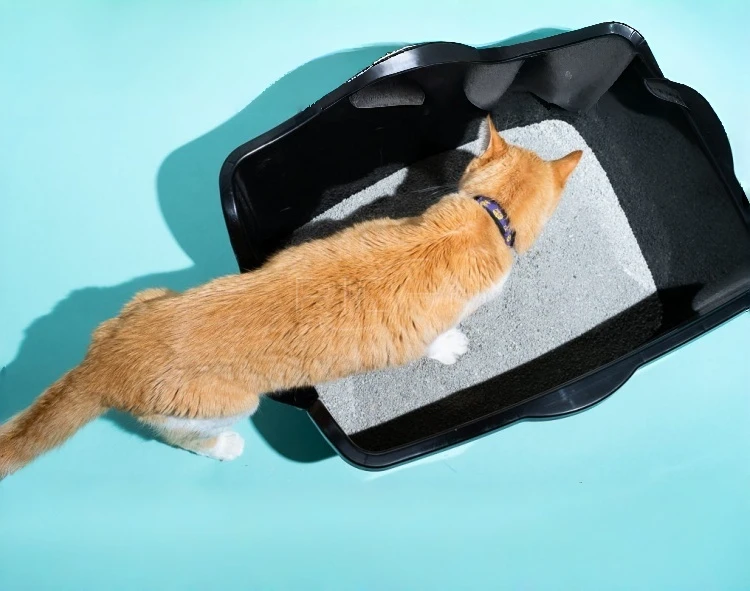


The pet care industry has created a growing demand for convenient, low-dust, absorbent litter products. At the same time, woodworking businesses generate large quantities of sawdust, wood shavings, and fine wood particles every day. These two trends create an interesting manufacturing opportunity: converting suitable wood residues into a commercial cat litter product.
However, turning sawdust into cat litter is not as simple as pressing wood particles into pellets.
The quality of the raw material, moisture condition, particle structure, pellet density, drying process, screening accuracy, and packaging method all influence how the final product behaves in a litter box. For manufacturers entering this market, understanding the relationship between those factors is more important than simply choosing a machine based on capacity.
A well-designed production system begins by defining the final litter product.
Start with the Type of Cat Litter You Want to Sell
Sawdust-based litter can be developed into different commercial products.
Some manufacturers focus on lightweight biodegradable pellets with strong liquid absorption. Others develop finer-grain products designed to break apart when exposed to moisture. Some brands emphasize natural wood characteristics, while others combine wood fiber with additional plant-based materials to improve physical performance.
The intended product determines the production conditions.
For example, a producer targeting a premium pet-care market may place greater emphasis on consistent pellet dimensions, low dust, clean appearance, and packaging quality. A bulk supplier may focus more heavily on production stability and cost per ton.
This means the first question should not be “What equipment do I need?”
It should be:
“What type of litter do I want customers to receive?”
That answer provides a much stronger basis for the entire project.
Not All Sawdust Is Equally Suitable
Woodworking waste sounds like one raw material, but in practice it can be extremely diverse.
Sawdust from furniture manufacturing may be different from sawdust generated by a sawmill. Planing residue can have a different fiber structure from fine sanding dust. Wood shavings may contain longer particles, while some processing waste is already extremely fine.
Species also matter.
Softwood and hardwood residues can differ in density, fiber structure, natural odor, and moisture characteristics.
For cat litter production, manufacturers must also pay attention to contamination. Material should be sourced from suitable untreated wood streams and kept away from residues that could compromise the intended pet-use application.
Clean sourcing is therefore part of product quality.
Why Moisture Is So Important
Moisture affects nearly every step of the manufacturing process.
Freshly generated sawdust may have significantly different moisture levels depending on the wood source and production environment. Material that is too wet can become difficult to process and may produce unstable granules. Material that is excessively dry may behave differently during forming and may create additional dust.
For this reason, moisture should be treated as a measurable production variable.
A dryer is not simply there to “make the sawdust dry.” The real objective is to create a consistent feed condition before the forming stage.
When the feedstock changes from batch to batch, production settings may also need adjustment.
Why Particle Size Matters
The size distribution of the raw material influences the shape and texture of the final litter.
Very fine particles may behave differently from fibrous wood residues. Larger particles may require further size reduction before forming.
A controlled particle structure improves consistency and helps the feed material move through the production system more predictably.
For manufacturers, this means crushing and screening should be considered as preparation and quality-control stages rather than secondary accessories.
A good process creates a relatively uniform feedstock before it reaches the forming section.
The Role of Compression
Once the sawdust has reached a suitable condition, it can be compacted into a more standardized form.
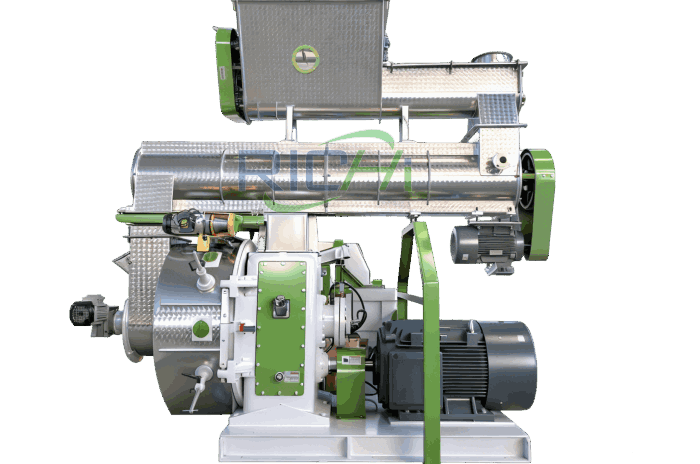
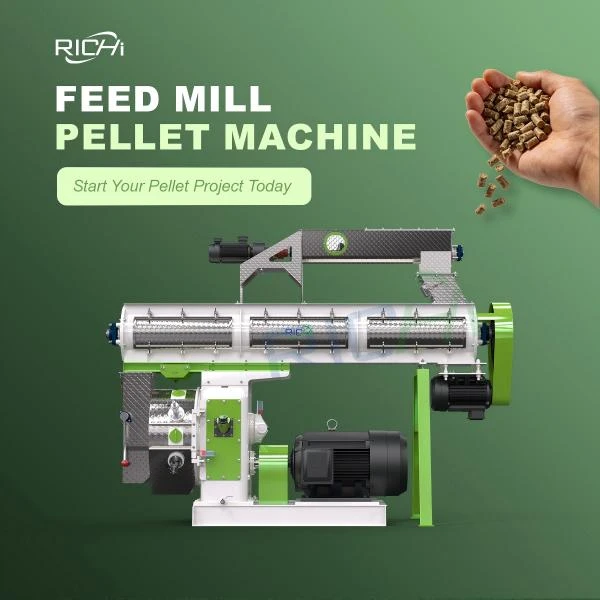
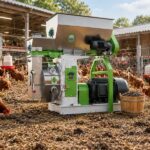
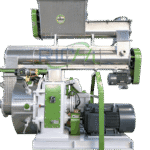
A Sawdust Cat Litter Making Machine can be configured to produce the desired pellet dimensions and density according to the product design.
Density is especially important for cat litter.
A pellet that is too loose may break down quickly during transport. A pellet that is too dense may not provide the desired absorption behavior.
The final specification therefore involves a balance between durability, absorption, weight, and user expectations.
Manufacturers should not assume that maximum compression automatically produces the best product.
Building a Stable Production Flow
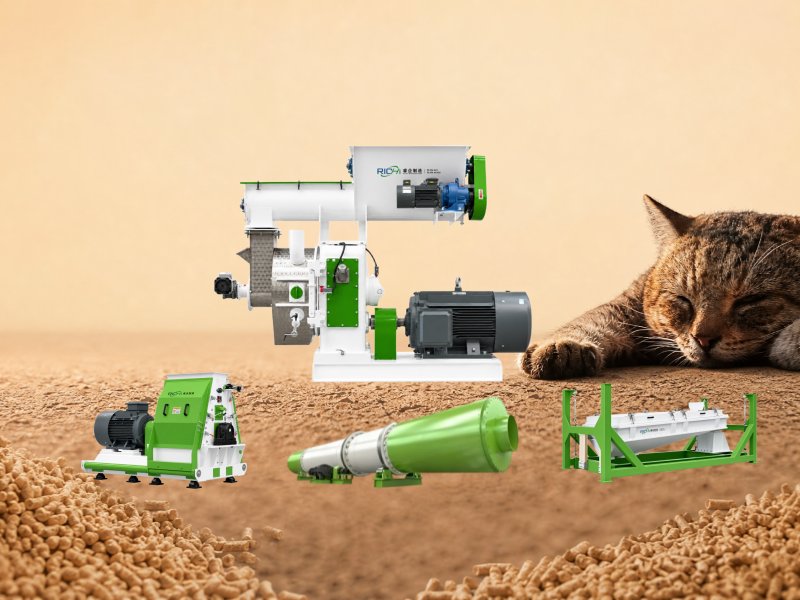
A commercial production system may include material reception, initial screening, size reduction, drying, mixing, forming, cooling, final screening, and packing.
The specific configuration depends on the raw material.
A small woodworking supplier may already have suitable crushing and conveying equipment.
A larger manufacturer starting a dedicated pet-care product line may need a complete integrated process.
This is where equipment engineering becomes important.
The goal is not to purchase the maximum number of machines. It is to create a smooth material flow with minimal bottlenecks.
If the dryer produces material faster than the forming stage can consume it, capacity is wasted.
If the forming section produces more product than the cooler and screening section can handle, the bottleneck simply moves downstream.
Production should therefore be balanced around the entire system.
How Capacity Changes the Design
A manufacturer producing several hundred kilograms per hour will have a different process requirement from a factory targeting several tons per hour.
When evaluating an industrial sawdust pellet mill machine for sale, buyers should consider the relationship between nominal capacity and actual feedstock characteristics.
A machine specification may be based on a particular moisture range, particle size, and material density.
If actual sawdust differs substantially from those conditions, production may change.
This is why capacity should always be evaluated together with raw-material testing.
A plant designed for one specific wood stream should not automatically be assumed to perform identically with another.
Low Dust Is a Product Feature
Dust is one of the most important concerns for many cat litter buyers.
Consumers may dislike litter that generates excessive fine particles during pouring or movement. Pet owners may also associate visible dust with poor product quality.
Manufacturers therefore need to think beyond pellet formation.
Dust control can involve the raw material, compression conditions, cooler settings, screening, conveying, and packaging.
Screening helps separate excessive fines.
Gentle product transfer can reduce unnecessary breakage.
Proper cooling can improve product stability before packaging.
The entire system contributes to the final dust profile.
Absorption and Breakdown Behavior
Cat litter products can behave very differently when exposed to liquid.
Some are designed to absorb rapidly while maintaining pellet structure.
Others are intended to break apart into softer particles after absorbing moisture.
Neither approach is automatically right for every market.
The important thing is to make the product behavior intentional and consistent.
Manufacturers can adjust particle size, density, composition, and processing conditions according to their product concept.
This is one reason product development should happen before pellet machine specifications are finalized.
Packaging Is Part of Manufacturing
A high-quality litter product can still be difficult to sell if its packaging is inconvenient.
Bag size affects distribution.
Bag strength affects transportation.
Moisture protection affects storage.
Label design influences retail presentation.
For e-commerce products, package weight can also influence shipping economics.
Therefore, packaging should be considered during project planning instead of being added after the production system has already been installed.
The filling and sealing section should match the expected production rate and sales model.
Turning an Existing Wood Business into a Pet-Care Business
One interesting opportunity is for established wood-processing companies to diversify into pet products.
Such businesses may already have access to large volumes of sawdust.
They may also already own conveyors, crushers, storage systems, or drying equipment.
Adding a cat litter product can create a new revenue stream from an existing residue source.
But this strategy requires a change in mindset.
Wood waste is normally treated as a by-product.
Cat litter is a consumer product.
That means contamination control, product consistency, packaging, branding, and customer experience become much more important.
(Related Post: https://biomasspelletizer.com/animal-bedding-pellet-machine/)
The value lies not merely in using waste material, but in converting that material into a product with a defined market position.
What Should Manufacturers Test Before Production?
A pilot evaluation can examine several variables:
Moisture before and after drying.
Particle-size distribution.
Pellet density.
Breakage rate.
Dust generation.
Absorption behavior.
Screening losses.
Packaging stability.
Storage performance.
These measurements help manufacturers determine whether the intended product can be produced consistently.
They also make it easier to identify where process adjustments are needed.
A Practical Approach to Equipment Selection
A professional equipment supplier should ask questions about the product before recommending a machine.
How fine is the sawdust?
Where does it come from?
What wood species are involved?
What is the starting moisture?
What pellet size is required?
What annual production is expected?
Will the product be sold in small retail bags or bulk quantities?
What existing equipment is available?
These questions make equipment selection much more precise.
Manufacturers reviewing view website resources about wood processing and pellet applications can also compare different production concepts before finalizing their plant layout.
Conclusion
Sawdust cat litter production sits at the intersection of woodworking, biomass utilization, and the pet-care industry.
The opportunity is attractive because manufacturers can transform a low-value residue into a standardized consumer product, but success depends on much more than compression.
Raw-material quality, contamination control, moisture, particle size, density, cooling, screening, dust management, and packaging all contribute to the final customer experience.
The strongest projects begin with the product concept and work backward toward the equipment.
Once the desired litter behavior, capacity, and packaging format are defined, the production system becomes much easier to design.
In the long term, the real advantage is not simply producing wood-based pellets. It is building a reliable manufacturing process that consistently delivers a product pet owners are willing to purchase again.