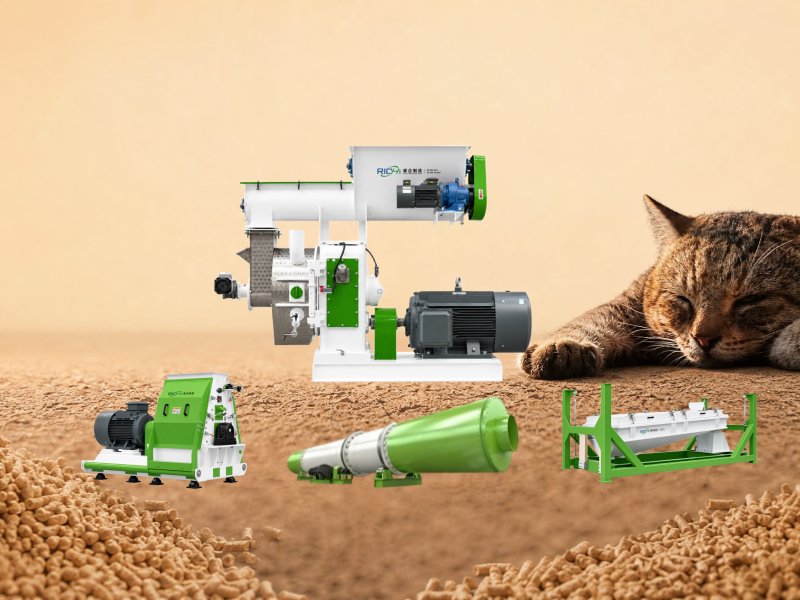



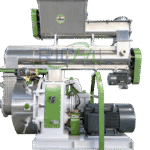



Wood chips are widely available from sawmills, forestry operations, furniture factories, wood-processing plants, and biomass recycling businesses. Although these residues can be used as fuel, their irregular size and relatively low bulk density often make direct handling and transportation inconvenient. Pelletizing provides a practical way to convert loose wood residues into a denser and more standardized biomass fuel.
For businesses planning a new project, selecting a wood chip pellet machine price should not be based on the machine quotation alone. The condition of the wood chips, required capacity, moisture content, particle size, and downstream equipment all have a direct impact on the total investment and production efficiency.
Why Pelletize Wood Chips?
Loose wood chips vary significantly in size and shape. Large chips can take up considerable storage space and may not feed smoothly into combustion equipment or automated material handling systems.
Pelletizing compresses prepared wood particles into cylindrical pellets with a higher bulk density. This can make transportation, storage, and feeding more convenient.
For sawmills and woodworking factories, pellet production also creates an additional utilization route for residues that might otherwise have limited value. Instead of paying for waste disposal, businesses can potentially convert suitable residues into commercial biomass fuel.
However, the economics depend on local conditions. The availability of low-cost wood residues, electricity, drying fuel, labor, transportation, and the local demand for biomass pellets should all be considered before investment.
Are Wood Chips Ready for Pelletizing?
Usually, wood chips require preparation before entering the pellet mill.
Pellet mills generally perform better when the feedstock has a relatively uniform particle size. Large wood chips, branches, slabs, or irregular pieces may need to pass through a crusher or hammer mill first.
A typical process may therefore include:
Wood chip receiving → crushing → screening → drying → pelletizing → cooling → screening → packaging
The exact configuration depends on the incoming material.
If a sawmill already produces relatively fine and uniform chips, the crushing stage may be simplified. Larger forestry residues, on the other hand, may require more intensive size reduction before pelletizing.
Why Is Moisture So Important?
Moisture is one of the most important factors affecting biomass pellet production.
Wood chips with excessive moisture can be difficult to pelletize efficiently. High moisture may reduce pellet strength, increase energy requirements, and create storage problems after production.
Drying may therefore be necessary before the material enters the pellet mill.
The dryer should not be selected solely according to the planned pellet output. The initial moisture level and the target final moisture determine how much water must actually be removed.
For example, two projects with the same pellet capacity may need very different drying systems if one uses relatively dry sawmill residues while the other processes freshly generated wet wood chips.
A proper moisture test before equipment selection can prevent over-sizing or under-sizing the drying section.
What Capacity Is Suitable?
Capacity should be selected according to the available raw material supply and expected sales volume.
A small biomass business may only need a few hundred kilograms per hour, while a large sawmill can generate enough wood residues to justify a multi-ton-per-hour production system.
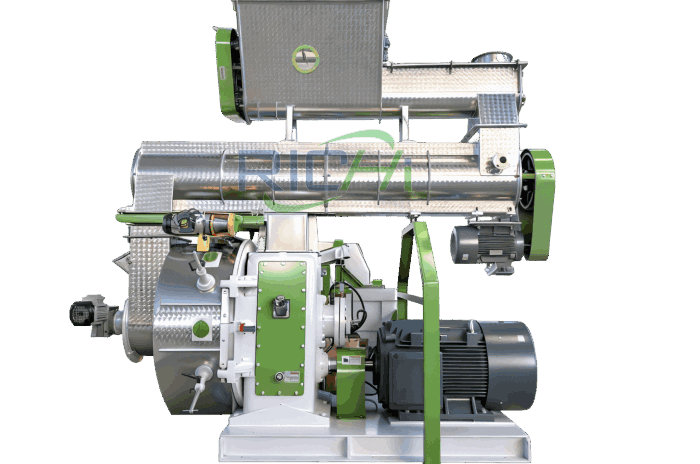
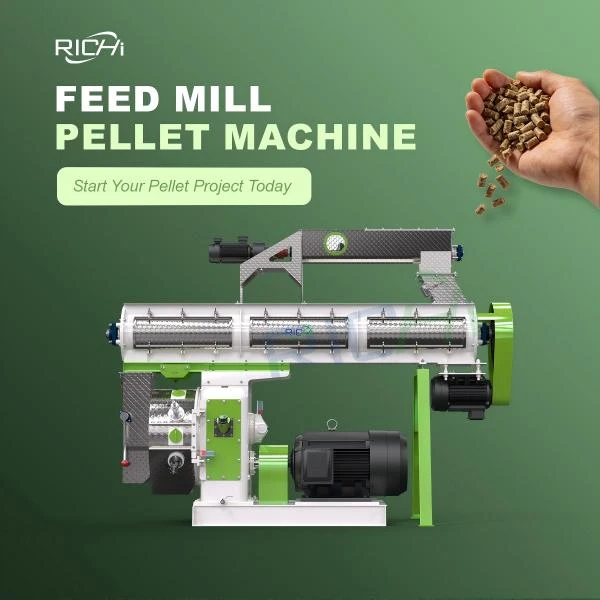
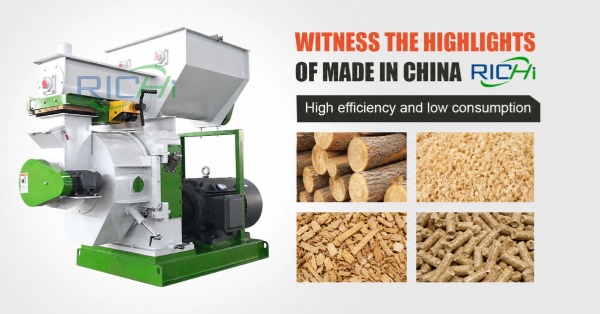
]For a medium-scale project, a wood pellet machine 2 ton per hour can be considered as one possible production capacity. However, the actual output depends on factors such as moisture, particle size, wood species, die specification, and machine operating conditions.
It is therefore better to calculate the available raw materials per day and then determine how many hours the pellet plant should operate.
Suppose a factory generates 20 tons of suitable dry wood residue every day. If the goal is to process all of it within ten operating hours, the production system needs to be designed around that requirement rather than selecting capacity simply because a certain machine model looks attractive.
How Does the Pelletizing Process Work?
After proper preparation, the wood particles are delivered to the pellet mill through a controlled feeding system.
Inside the machine, rotating rollers compress the biomass against the die. Pressure forces the wood fibers through the die holes, producing cylindrical strands that are cut into pellets.
The natural lignin in wood can act as a binder under suitable processing conditions. This is one reason clean wood residues can generally be pelletized without adding large quantities of external binders.
However, the performance of each material can differ. Wood species, moisture, particle size, and storage conditions may influence pellet quality.
Operators should therefore monitor feed rate, die condition, roller adjustment, and material consistency during production.
What Happens After Pelletizing?
Fresh biomass pellets leave the pellet mill at an elevated temperature. They may also contain residual moisture and can be relatively fragile immediately after compression.
A cooler reduces the pellet temperature and helps stabilize the finished product.
After cooling, screening equipment can separate qualified pellets from excessive fines or broken particles. Depending on the production system, fines may be recycled into the pelletizing process.
For commercial sales, the finished pellets can then be weighed and packed into bags or transferred into bulk storage.
This downstream section is important because high-quality pellets can still be damaged if cooling, screening, or packaging is not properly designed.
What Other Biomass Can Be Processed?
Wood chip pellet systems are often part of a broader biomass utilization strategy.
Depending on the equipment configuration, businesses may also process sawdust, wood shavings, forestry residues, or other suitable woody materials.
A company with multiple sources of biomass can sometimes design a flexible system that uses different raw materials during different seasons. This can improve feedstock availability and reduce reliance on a single residue source.
However, different materials should not automatically be mixed together. Their moisture levels, density, ash content, and pelletizing behavior may vary considerably.
Testing is recommended before introducing a new material into an existing production system.
How Can Businesses Reduce Production Costs?
The production cost per ton depends on several factors.
Raw material is often one of the biggest advantages for businesses that generate their own wood waste. If the material is available as a low-cost by-product, the economics may be more attractive.
Electricity is another major consideration. Crushing, drying, pelletizing, conveying, cooling, and packaging all consume energy.
Drying can be particularly important. A project using wet wood chips may spend considerably more energy removing moisture than a project processing dry sawdust.
Labor and maintenance should also be included. Equipment that is easy to inspect and maintain can reduce downtime and improve long-term operating efficiency.
Is a Complete Production Line Necessary?
A complete production line is not required for every business.
A small producer may begin with a crusher, pellet mill, cooler, and screener. Manual feeding and packaging can be used when the production volume is low.
As demand increases, the plant can be expanded with conveyors, storage bins, automatic feeders, packing systems, and centralized controls.
A complete wood pellet making machine system can integrate multiple stages into a continuous workflow. This can be particularly useful for commercial plants where production efficiency and labor reduction are important.
The decision to automate should be based on production volume and return on investment rather than automation level alone.
How Should Buyers Compare Suppliers?
A quotation should be evaluated according to the complete technical configuration.
Important factors include motor brand, bearing quality, die and roller materials, machine structure, production capacity, spare parts, installation support, operator training, and after-sales service.
Buyers should also ask whether the quoted output has been tested with the same or similar wood chips. A capacity figure based on a different feedstock may not accurately represent actual production results.
Material testing is therefore one of the most useful steps before placing an order.
What Factory Conditions Are Important?
Biomass processing facilities need sufficient space for raw material storage, production equipment, finished pellet storage, and maintenance access.
The layout should minimize unnecessary material movement between machines. Conveyors should be arranged so that material flows naturally from one stage to the next.
Dust management is another consideration. Crushing and pelletizing can generate fine particles, so regular cleaning, appropriate ventilation, and suitable safety measures should form part of the plant design.
Storage conditions are equally important because biomass pellets can absorb moisture if exposed to unfavorable conditions.
Conclusion
Wood chips can become a valuable biomass fuel when they are properly prepared and pelletized. However, successful production depends on much more than the pellet mill itself.
Businesses should evaluate wood chip moisture, particle size, available raw material, required capacity, drying needs, electricity consumption, cooling, screening, and packaging before making an investment.
A medium-scale project may consider wood chip pellet machine 2 ton per hour, while larger operations may need multiple machines or a higher-capacity system. The best choice is the configuration that matches real raw material availability and market demand.
By designing the entire process rather than focusing on a single machine, producers can improve production stability and make better use of wood-processing residues. For additional biomass processing information, read more and compare equipment configurations before finalizing the project.
https://pelletizerequipment.com/sawdust-pellet-machine-for-sale