



Poultry feed is one of the most important factors affecting the growth, health, egg production, and profitability of poultry farms. For many farmers, commercially manufactured feed can represent a significant part of total production costs. This is particularly true in regions where imported feed ingredients or finished feed are expensive because of transportation, exchange rates, or supply chain limitations.
This raises an important question: Can poultry feed be made from local ingredients?
The answer is yes. In many regions, poultry feed can be formulated and manufactured using locally available grains, oilseed meals, agricultural by-products, and other suitable feed ingredients. Corn, wheat, sorghum, rice bran, wheat bran, soybean meal, sunflower meal, cassava products, and other locally available materials can all potentially contribute to poultry diets.
However, using local ingredients does not simply mean mixing whatever materials are available. Poultry have specific nutritional requirements for energy, protein, amino acids, minerals, vitamins, and other nutrients. Local ingredients need to be evaluated for nutritional value, safety, availability, price, and processing characteristics before being incorporated into a feed formula.
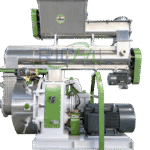
Modern poultry feed lines can help farmers and feed manufacturers transform these local raw materials into uniform mash, pellets, or crumbles. With appropriate processing equipment and professional feed formulation, local resources can become an important part of a cost-effective poultry feed production system.
This article explains which local ingredients can be used, how to formulate poultry feed from them, what processing steps are required, and how to establish an efficient local poultry feed production system.
1. Why Use Local Ingredients for Poultry Feed?
There are several potential advantages to using locally available feed ingredients.
Lower Transportation Costs
Imported ingredients may need to travel long distances before reaching a poultry farm. Transportation costs can significantly increase the final feed price.
Using local ingredients can reduce the distance between raw material suppliers and the feed production facility.
Better Availability
Local ingredients may be available seasonally or throughout the year, depending on the region.
For example, maize may be widely available in one area, while rice bran, cassava, wheat bran, or sorghum may be more accessible in another.
Reduced Dependence on Imports
Using local resources can reduce dependence on imported feed ingredients and help farmers build a more resilient supply chain.
Support for Local Agriculture
Local feed production creates additional demand for agricultural products and processing by-products.
Potentially Lower Feed Costs
When locally available ingredients are competitively priced, they may reduce the cost of poultry feed.
However, price should always be evaluated alongside nutritional value. A cheap ingredient is not necessarily economical if it provides little usable nutrition or causes processing problems.
2. What Are Local Feed Ingredients?
The definition of “local ingredients” depends on the agricultural resources available in each region.
Common examples include:
- Corn
- Wheat
- Sorghum
- Barley
- Rice
- Rice bran
- Wheat bran
- Soybean meal
- Sunflower meal
- Peanut meal
- Rapeseed meal
- Cassava
- Cassava meal
- Palm products
- Fish meal
- Vegetable oils
- Local grain-processing by-products
Some regions may also have access to agricultural residues that can potentially be used after proper processing and quality evaluation.
The key principle is that an ingredient should not be included simply because it is locally available. It must be nutritionally suitable and safe for poultry.
3. Corn as a Local Energy Ingredient
Corn is one of the most widely used energy ingredients in poultry feed.
It provides:
- Energy
- Starch
- Some protein
- Certain vitamins and pigments
Corn is particularly suitable for pellet production because its starch can contribute to binding during conditioning.
In countries where corn production is strong, locally grown corn can become a major component of poultry feed.
However, corn quality should be monitored.
Important considerations include:
- Moisture
- Mold
- Mycotoxins
- Foreign materials
- Storage conditions
- Nutritional consistency
Poorly stored corn can develop mold and become unsuitable for poultry feed.
4. Wheat and Sorghum
Wheat can also be used as an important energy source.
In wheat-producing regions, local wheat or suitable wheat by-products can be incorporated into poultry feed.
Sorghum is another useful local ingredient, particularly in areas where drought-resistant crops are important.
Sorghum provides energy and can partially replace corn in some formulas.
However, different varieties of sorghum can have different nutritional and anti-nutritional characteristics. Feed manufacturers should evaluate the specific material before using it at high inclusion rates.
5. Rice Bran as a Local Feed Ingredient
Rice-producing regions often have large quantities of rice bran available as a milling by-product.
Rice bran can provide:
- Energy
- Fat
- Protein
- Fiber
- Some minerals
It can be a useful ingredient in poultry feed when properly processed and stored.
However, rice bran can have relatively high fat content and may deteriorate if stored under poor conditions.
Therefore, freshness and storage are important.
Rice bran should be evaluated for moisture, rancidity, contamination, and nutritional composition.
6. Wheat Bran
Wheat bran is another commonly available agricultural by-product.
It can provide:
- Fiber
- Protein
- Energy
- Certain minerals
Wheat bran can be useful in poultry feed, but inclusion levels should be controlled because excessive fiber may reduce the energy density of the diet.
The appropriate level depends on the target poultry species and growth stage.
7. Soybean Meal and Other Protein Sources
Energy ingredients alone cannot provide a balanced poultry diet.
Protein sources are essential.
Soybean meal is widely used because it provides high-quality protein and a useful amino acid profile.
Where soybean processing industries are locally available, soybean meal can become an important component of local poultry feed.
Other possible protein sources include:
- Sunflower meal
- Rapeseed meal
- Peanut meal
- Fish meal
- Other approved oilseed meals
However, these ingredients differ significantly in protein quality, fiber, amino acid composition, and anti-nutritional factors.
They should therefore be incorporated based on nutritional analysis rather than simple substitution.
8. Cassava and Other Root Crops
In tropical regions, cassava may be locally available in large quantities.
Cassava can provide energy and may be processed into:
- Cassava meal
- Cassava chips
- Cassava flour
However, cassava must be properly processed before being included in poultry feed because raw cassava may contain compounds that can be harmful if not adequately treated.
Drying and other appropriate processing methods can help reduce these risks.
The final inclusion rate should be determined by a qualified feed nutritionist.
9. Agricultural By-Products
One of the major advantages of local feed production is the possibility of utilizing suitable agricultural processing by-products.
Examples may include:
- Rice bran
- Wheat bran
- Oilseed meals
- Corn-processing by-products
- Cassava-processing products
These materials can reduce feed costs while creating value from resources that might otherwise have limited economic value.
However, by-products can vary considerably in nutritional composition.
Regular quality testing is therefore important.
10. Can Local Ingredients Provide Complete Nutrition?
Yes, but the ingredients need to be properly combined.
No single local ingredient can normally provide everything poultry require.
A complete poultry feed needs appropriate levels of:
Energy
Energy is necessary for growth, maintenance, movement, and egg production.
Protein
Protein provides amino acids needed for tissue development and production.
Essential Amino Acids
Methionine, lysine, threonine, and other amino acids may need to be balanced carefully.
Minerals
Calcium and phosphorus are particularly important for bone development and eggshell formation.
Vitamins
Vitamins support metabolism, immunity, growth, and production.
Therefore, local feed ingredients should be combined into a balanced formula rather than used individually.
11. Feed Formulation Is the Key
The most important step in using local ingredients is feed formulation.
A feed formula should consider:
- Nutritional requirements
- Ingredient availability
- Ingredient price
- Ingredient quality
- Seasonal changes
- Processing characteristics
- Target poultry
- Production stage
For example, broiler starter feed has different nutritional requirements from layer feed.
Similarly, chick feed cannot simply use the same formula as mature broiler feed.
A professional feed formulation system can help determine the appropriate inclusion levels of different local ingredients.
12. Local Ingredient Quality Must Be Tested
Before using a local ingredient, producers should understand its quality.
Important tests may include:
- Moisture
- Crude protein
- Fat
- Fiber
- Ash
- Energy
- Amino acid profile
- Mycotoxins
- Other contaminants
The nutritional value of agricultural products can vary from batch to batch.
For example, two batches of rice bran may have different fat and fiber levels depending on the milling process.
Therefore, regular testing improves formula accuracy and feed consistency.
13. Raw Material Cleaning
Once suitable local ingredients have been selected, they need to be prepared for processing.
The first step is often cleaning.
Local grains may contain:
- Stones
- Soil
- Metal
- Dust
- Plant residues
- Foreign materials
Cleaning equipment such as vibrating screens and magnetic separators can remove these contaminants.
This protects downstream equipment and improves feed hygiene.
14. Grinding Local Ingredients
Many local ingredients need to be ground before mixing.
A hammer mill can process materials such as:
- Corn
- Wheat
- Sorghum
- Dried cassava
- Other suitable feed materials
Appropriate particle size improves:
- Mixing uniformity
- Pellet formation
- Feed consistency
- Pellet durability
However, different materials require different grinding conditions.
The grinding system should therefore be selected based on the actual raw material characteristics.
15. Batching and Mixing
After grinding, ingredients should be accurately weighed according to the formula.
Automatic batching systems can be used for commercial production.
The ingredients are then transferred to a mixer.
A good mixer distributes energy ingredients, protein sources, minerals, vitamins, and additives evenly throughout the batch.
Uniform mixing is essential for nutritional consistency.
https://pelletisingmachine.com/animal-feed-mixer-machine
16. Can Local Ingredients Be Made into Pellets?
Yes.
Many suitable local feed ingredients can be processed into poultry feed pellets after proper grinding, formulation, mixing, and conditioning.
Pelleting offers several advantages:
- Convenient handling
- Reduced ingredient separation
- Lower dust
- Better transportability
- Reduced feed waste
- More uniform physical form
The exact pellet quality depends on the feed formula and processing conditions.
Some high-fiber or difficult-to-pellet ingredients may require special formulation or conditioning adjustments.
17. Conditioning Local Feed Mixtures
Before pelleting, the mixed feed may be conditioned using steam.
Conditioning adds heat and moisture and can improve the binding characteristics of the feed.
It can help:
- Improve pellet durability
- Reduce fines
- Increase production capacity
- Improve starch gelatinization
- Reduce pellet mill energy consumption
The appropriate conditioning conditions depend on the formula.
A feed containing more starch may respond differently from a high-fiber formula.
18. Pelletizing with Poultry Feed Lines
A complete production system can integrate the different stages into one process.
A typical sequence is:
Cleaning → Crushing → Batching → Mixing → Conditioning → Pelletizing → Cooling → Screening → Packaging
Modern poultry feed lines can be configured for different production capacities.
A small farm may use a compact system with manual feeding and semi-automatic operation.
A commercial feed factory may use automatic batching, computerized control, continuous conveying, high-capacity pellet mills, automatic cooling, screening, and packaging.
The appropriate configuration depends on production requirements.
19. Choosing Pellet Size
Different poultry require different feed particle sizes.
Young chicks generally require smaller particles.
Broilers can gradually transition to larger pellets as they grow.
Layers may use pellet sizes suitable for their feeding systems.
Ducks, turkeys, geese, and quail may also require different pellet specifications.
The pellet diameter is mainly controlled by the pellet mill die.
A flexible feed plant can use different dies to produce different pellet sizes.
20. Cooling and Screening
Fresh pellets are hot after leaving the pellet mill.
They need to be cooled before storage.
A pellet cooler removes excess heat and moisture.
After cooling, pellets are screened to remove fines and broken pieces.
Fines can often be returned to the pelletizing process.
This helps improve finished feed quality and reduce material waste.
21. Packaging Local Poultry Feed
After screening, finished pellets can be packed into bags.
Small farms may use manual weighing and packaging.
Commercial producers may use automatic packing machines.
Packaging should protect feed from:
- Moisture
- Dust
- Contamination
- Physical damage
Properly sealed bags also make transportation and storage easier.
22. How Local Ingredients Can Reduce Feed Costs
Using local ingredients can potentially reduce feed costs in several ways.
Lower Transportation Expenses
Locally sourced materials travel shorter distances.
Reduced Import Dependence
Farmers may avoid some costs associated with imported ingredients.
Use of Agricultural By-Products
Rice bran, wheat bran, and other suitable by-products may be less expensive than conventional ingredients.
Seasonal Purchasing
Farmers may purchase suitable grains during harvest periods when local prices are more competitive.
However, the cheapest ingredient should not automatically replace a more nutritious ingredient.
The correct comparison should consider cost per unit of usable nutrition, not simply cost per ton.
23. Challenges of Using Local Ingredients
Despite the advantages, local ingredient-based feed production also has challenges.
Nutritional Variation
Local ingredients may vary between batches.
Seasonal Availability
Some materials may only be available during certain periods.
Storage Requirements
Grains and by-products need proper storage.
Contamination Risks
Poorly stored ingredients may develop mold or contamination.
Anti-Nutritional Factors
Some ingredients require processing before use.
Formulation Complexity
Replacing one ingredient with another may alter protein, energy, amino acid, fiber, and mineral levels.
These challenges can be managed through quality testing, proper storage, professional formulation, and appropriate processing.
24. How to Store Local Ingredients
Good storage is essential for maintaining ingredient quality.
The storage facility should be:
- Dry
- Clean
- Well ventilated
- Protected from pests
- Protected from rain
- Easy to clean
Bulk grains can be stored in silos or bins, while bagged materials can be stored on pallets.
Ingredients should be rotated according to a first-in, first-out principle where appropriate.
Moisture should be monitored regularly.
25. Small-Scale Poultry Feed Production
Small farms do not necessarily need a large feed factory.
A compact system can include:
Raw Material Cleaning → Hammer Mill → Mixer → Pellet Mill → Cooler → Screener → Packaging
Some operations can be performed manually to reduce initial investment.
As production grows, farmers can add:
- Automatic batching
- Conveyors
- Steam conditioning
- Automatic packaging
- Larger storage bins
- Centralized control
A modular approach can allow the feed production system to grow with the farm.
26. Commercial Local Feed Manufacturing
In areas with abundant agricultural resources, local poultry feed manufacturing can become a business opportunity.
A commercial plant can purchase local ingredients from farmers and agricultural processors and convert them into finished poultry feed.
A typical commercial facility may include:
Raw Material Receiving → Cleaning → Storage → Grinding → Batching → Mixing → Conditioning → Pelletizing → Cooling → Screening → Packaging → Finished Feed Storage
Such poultry feed lines can be customized according to local raw materials and market demand.
For example, a region with large corn production may design the formula and processing system around corn as the primary energy ingredient.
A rice-producing region may make greater use of rice bran and other rice-processing by-products.
27. Automation in Local Feed Production
Automation can improve the consistency of locally produced feed.
A PLC control system can coordinate:
- Raw material conveying
- Batching
- Mixing
- Steam conditioning
- Pelletizing
- Cooling
- Screening
- Packaging
Automation can reduce manual errors and make formula management easier.
For larger plants, a computerized system can store different feed formulas and production parameters.
This is useful when a factory produces broiler, layer, chick, duck, and other poultry feeds.
28. How to Design Poultry Feed Lines for Local Ingredients
A feed production line should be designed around the actual local raw materials.
Before equipment selection, producers should determine:
1. What ingredients are available?
Identify local grains, protein sources, and agricultural by-products.
2. How much is available?
Estimate annual and seasonal supply.
3. What is the nutritional value?
Conduct laboratory testing where necessary.
4. How difficult are the ingredients to process?
High-fiber or high-moisture materials may require additional processing.
5. What capacity is required?
Estimate daily and annual feed demand.
6. What pellet specifications are needed?
Determine pellet diameter and product type.
7. What automation level is appropriate?
Choose manual, semi-automatic, or fully automatic production.
This information allows equipment suppliers to design a more suitable system.
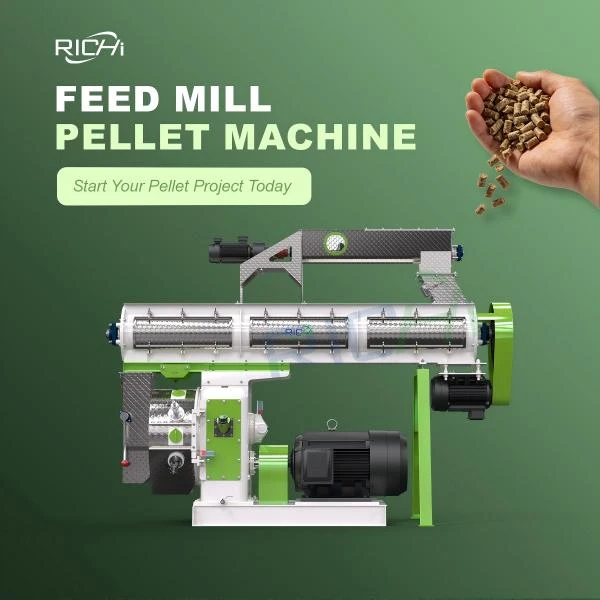
29. RICHI Poultry Feed Production Solutions
RICHI provides customized poultry feed processing equipment and turnkey production solutions for customers who want to use local ingredients to manufacture poultry feed.
The production process can be designed according to the customer’s:
- Local raw materials
- Feed formulas
- Target poultry
- Production capacity
- Pellet specifications
- Factory layout
- Automation requirements
- Investment budget
A complete system may include:
Raw Material Cleaning → Crushing → Batching → Mixing → Conditioning → Pelletizing → Cooling → Screening → Crumbling/Coating → Packaging
For small farms, a compact production system can be configured to reduce unnecessary investment.
For commercial feed manufacturers, larger automated poultry feed lines can be designed to process multiple feed formulas and operate continuously.
RICHI Machinery can provide turnkey services covering production process design, equipment manufacturing, transportation and customs clearance, installation and commissioning, operator training, spare parts support, and long-term technical service.
This integrated approach allows local raw materials to be transformed into finished poultry feed through a coordinated production system.
30. Is Local Poultry Feed Economically Viable?
The economic feasibility depends on several factors.
The main variables include:
- Local ingredient prices
- Transportation costs
- Feed formulation
- Production capacity
- Equipment investment
- Electricity costs
- Labor costs
- Storage costs
- Feed selling price
Farmers should calculate the total cost per ton of finished feed rather than comparing only individual ingredient prices.
If local ingredients are abundant and reasonably priced, producing feed locally can be an attractive option.
For commercial feed producers, the business case becomes stronger when there is a stable supply of raw materials and a reliable local market for finished feed.
31. Quality Control Is Essential
Using local ingredients does not mean compromising feed quality.
A local feed factory should establish quality control procedures for both raw materials and finished products.
Raw materials should be checked regularly for:
- Moisture
- Protein
- Fat
- Fiber
- Contamination
- Mold
- Mycotoxins
Finished feed can be evaluated for:
- Pellet size
- Moisture
- Pellet durability
- Bulk density
- Nutritional composition
- Fines percentage
Consistent quality control builds customer confidence and improves poultry production performance.
32. Tips for Successfully Using Local Ingredients
Several practical principles can help producers succeed.
Test Before Large-Scale Use
Do not introduce a new ingredient into a large feed formula without evaluating its quality.
Maintain Several Ingredient Sources
Having alternative suppliers can reduce supply risk.
Monitor Seasonal Changes
Ingredient quality and prices can change during the year.
Store Ingredients Properly
Good storage protects nutritional value.
Use Professional Formulation
Nutritional balance should come before simple cost reduction.
Adapt Processing Parameters
Different ingredients may require different grinding and pelleting conditions.
Keep Production Records
Record ingredient batches, formulas, production output, and quality results.
Conclusion
So, can poultry feed be made from local ingredients?
Yes. Local grains, oilseed meals, agricultural by-products, and other suitable feed materials can provide valuable nutritional resources for poultry feed production. Corn, wheat, sorghum, rice bran, wheat bran, soybean meal, sunflower meal, cassava products, and other locally available ingredients can all potentially be incorporated into properly formulated poultry diets.
However, successful local feed production requires more than simply replacing imported ingredients with local materials. Every ingredient should be evaluated for nutritional value, safety, availability, storage stability, and processing characteristics. A balanced formula is essential to ensure that poultry receive adequate energy, protein, amino acids, minerals, and vitamins.
Modern poultry feed lines make it possible to transform these ingredients into uniform and convenient feed products through cleaning, grinding, batching, mixing, conditioning, pelleting, cooling, screening, and packaging.
For small farms, a compact production system can provide greater control over feed production. For commercial manufacturers, a complete automated production line can turn locally available agricultural resources into a scalable feed business.
The most successful approach is to combine local raw material advantages with professional feed formulation, quality control, appropriate processing technology, and properly designed poultry feed lines. With the right strategy, local ingredients can become an important foundation for producing cost-effective, consistent, and high-quality poultry feed.