

Grass can be processed into compact pellets for animal feed, bedding, or biomass fuel. However, the right equipment depends on the type and condition of the grass, the required production capacity, and the final use of the pellets.
For this reason, selecting a machine should involve more than simply comparing motor power or equipment prices. A complete production system needs to match the raw material with each processing stage.
Start with the Raw Material
Grass can vary considerably in moisture, fiber content, particle size, and density. Freshly harvested grass contains much more moisture than dried grass or hay, which directly affects the preparation process.
If the material is already dry and finely chopped, it may only require grinding before pelletizing. Fresh or wet grass, on the other hand, may require additional drying equipment.
The first step is therefore to determine the actual condition of the available material.
Determine the Required Capacity
Production capacity is another important consideration. A small farm may only need several hundred kilograms of pellets per hour, while a commercial feed or biomass operation may require several tons per hour.
The required capacity should be based on available raw material and expected pellet demand. Choosing a machine that is significantly larger than necessary can increase equipment and operating costs without providing a practical benefit.
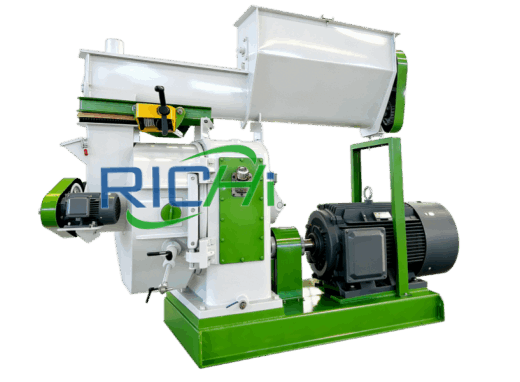
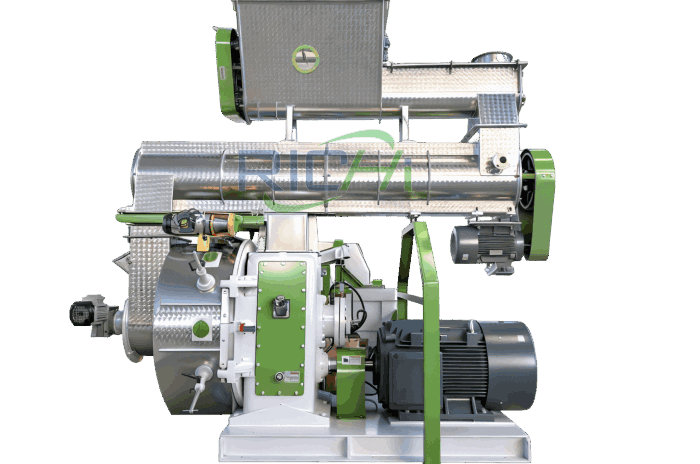
A properly sized grass pellet mill for sale should provide enough capacity for the planned production schedule while leaving reasonable room for future demand.
Grinding and Material Preparation
Long grass fibers can make feeding and pellet formation more difficult. A hammer mill or similar grinder can reduce the material to a more consistent size before it enters the pelletizing section.
Particle size should be suitable for the selected pellet mill and final pellet diameter. Consistent material also helps maintain a more stable feeding rate.
For larger systems, conveyors and storage bins can be added to maintain continuous material flow between preparation and pelletizing.
Moisture Control
Moisture has a major influence on pellet formation.
Material that is too wet may reduce production stability and create problems during pelletizing. Material that is excessively dry may also affect pellet formation and durability.
The ideal moisture condition depends on the grass type and equipment configuration, so testing the raw material before finalizing the system can be useful.
If additional drying is required, a rotary dryer can be incorporated into the production line. If the grass is already sufficiently dry, the project may be able to use a simpler configuration.
Pelletizing Process
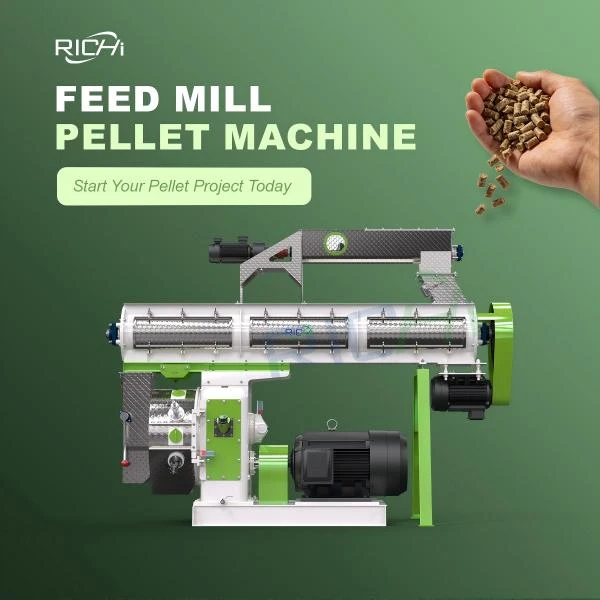
During pellet production, the prepared grass enters the pellet mill and is compressed through die holes under mechanical pressure. The material emerges as compact cylindrical pellets.
The die diameter determines the approximate pellet size, while raw material condition, formulation, moisture, and machine settings affect the final product.
For animal feed applications, the formulation may include grains, protein sources, minerals, or other ingredients. In biomass applications, grass may be processed with other suitable plant residues.
A complete 5T/H hay pellet machine for sale can also be considered when the project needs to process dried grass or hay with similar fibrous characteristics.
A complete pellet machine for sale should therefore be evaluated according to the actual material and intended application rather than machine specifications alone.
Cooling and Screening
Pellets leave the pellet mill at an elevated temperature because of compression and friction. Cooling equipment can reduce the temperature before the pellets are stored or packaged.
Screening can then separate loose fines and undersized particles from the finished pellets. Depending on the system design, collected fines may be returned to the production process.
These stages become increasingly important as production capacity increases and consistent commercial pellet quality is required.
Feed, Bedding, or Fuel?
The final application also affects equipment selection.
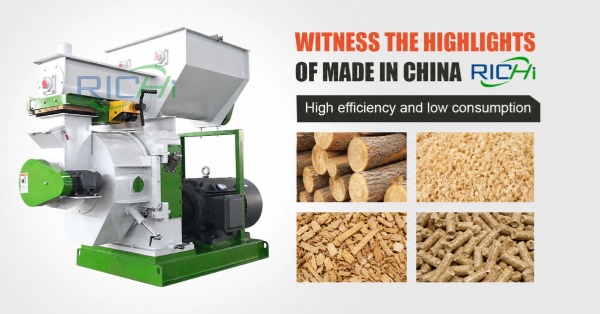
Grass pellets can be used as a feed ingredient or complete feed product when formulated appropriately. They can also be produced as bedding material or biomass fuel.
Different applications may require different pellet diameters, formulations, durability, and downstream handling systems. Defining the final product at the beginning makes equipment selection much easier.
Planning a Complete Production System
A typical grass pellet project may include:
- Raw material feeding
- Cleaning or sorting when necessary
- Grinding
- Drying when required
- Pelletizing
- Cooling
- Screening
- Conveying
- Storage
- Packaging
Not every project needs every machine. A facility processing dry, clean grass may use a much simpler configuration than one starting with freshly harvested material.
The most practical approach is to design the system around the actual raw material, capacity, and final product. For additional information about grass pellet processing and equipment selection, click to read.
Related Post: https://pelletizerequipment.com/alfalfa-pellet-machine-for-sale/