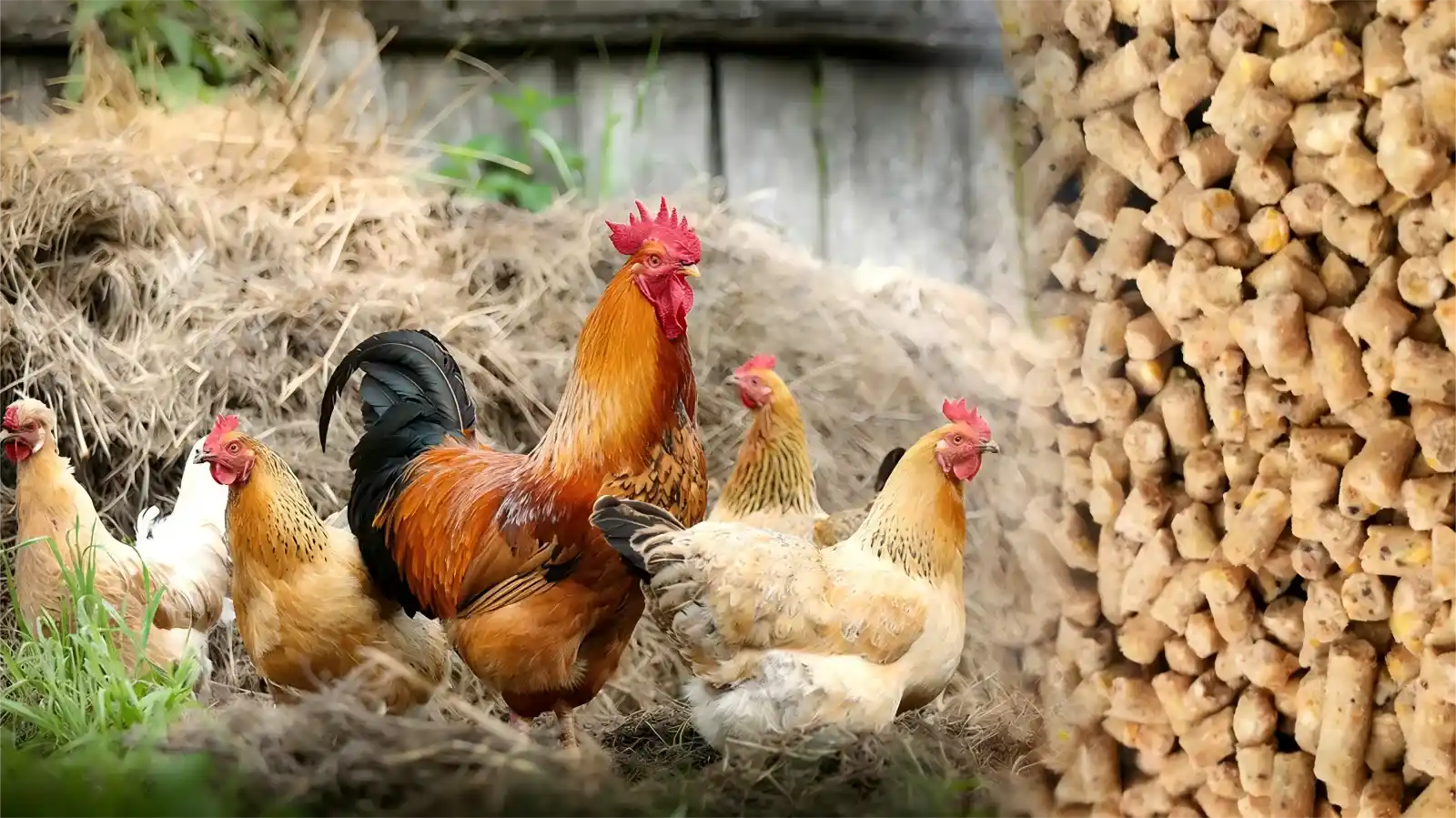



When people begin planning a poultry feed processing project, equipment cost is usually one of the first questions that comes to mind. Yet there is no universal price for a poultry feed plant. A small farm producing feed for its own chickens may need only a few basic machines, while a commercial manufacturer supplying several farms may require an integrated automated production system.
The final investment depends on many factors, including production capacity, feed formulas, raw materials, pellet specifications, grinding requirements, storage, automation, building conditions, and packaging methods.
For this reason, understanding how a feed plant is designed is often more useful than looking for a single price figure. Once the production process is clear, it becomes easier to understand why different projects have different equipment configurations and investment levels.
This article examines the main questions involved in planning a poultry feed processing facility, from raw-material preparation and formulation to pelletizing, cooling, storage, plant layout, and capacity selection.
What Does a Poultry Feed Plant Actually Include?
A modern poultry feed plant is a combination of several processing stages rather than one individual machine.
Depending on the scale of production, the system may include raw-material receiving, cleaning, crushing, batching, mixing, pelleting, cooling, screening, conveying, storage, and packing.
Some smaller operations do not need every stage. A farm that already has a grain grinder and mixer may only need equipment for pellet production. A commercial factory, on the other hand, usually requires a more integrated material-handling and production system.
The first step in planning is therefore to identify what the facility actually needs to accomplish.
This prevents unnecessary equipment from being included in the initial investment and also reduces the risk of creating bottlenecks later.
Which Raw Materials Are Commonly Used in Poultry Feed?
Poultry diets can contain many different ingredients, depending on the age of the birds, production purpose, local ingredient availability, and nutritional formula.
Corn is commonly used as an energy source, while wheat, barley, rice bran, and other grains may also be included. Protein sources can include soybean meal, rapeseed meal, fish meal, and other suitable ingredients.
Vitamins, minerals, amino acids, and other additives are generally included in smaller quantities.
The proportions are not fixed because broilers, layers, breeders, and young chicks have different nutritional requirements.
This variation has a direct effect on processing equipment. A formula containing large quantities of grain may require substantial grinding capacity, while a formula containing many micro-ingredients requires accurate batching and thorough mixing.
Therefore, feed formulation should be considered before finalizing the machinery configuration.
Does Feed Formula Affect Equipment Selection?
Yes. Feed formulation is one of the most important factors in equipment selection.
Two facilities producing the same general type of poultry feed may use different raw materials and therefore require different processing conditions.
For example, a feed formula with a high proportion of corn may place greater demand on the grinding system. A formula containing oil or other liquid ingredients may require a liquid dosing system.
A facility producing several formulas also needs to consider how ingredients are stored, weighed, mixed, and transferred between batches.
This is why equipment selection should begin with the production plan rather than with a particular machine model.
The machinery needs to support the actual formulation, production capacity, and finished-feed specifications.
How Important Is Raw-Material Grinding?
Grinding reduces the particle size of grains and other suitable ingredients before batching and mixing.
Particle size affects mixing, pellet formation, feed texture, and energy consumption. However, the ideal size is not necessarily the smallest possible size.
Overly fine grinding can increase electricity consumption and dust generation, while insufficient grinding can affect mixing uniformity and pellet quality.
Hammer mills are commonly used for grinding grains in feed-processing facilities. The appropriate model depends on the raw materials, required throughput, screen configuration, and production schedule.
For a small farm, a compact grinder may be sufficient. For a commercial facility, multiple grinding lines or larger-capacity equipment may be needed to maintain continuous production.
The grinding section should also be coordinated with the capacity of the downstream batching and mixing systems.
Why Is Batching Accuracy Important?
A poultry feed formula can contain ingredients used at very different inclusion rates.
Corn or wheat may make up a large percentage of a batch, while vitamins, minerals, amino acids, and other additives may be included at much smaller levels.
If ingredients are not weighed accurately, the final nutritional composition can deviate from the intended formula.
For small-scale operations, some ingredients may be weighed manually. As production volume increases, automatic batching becomes increasingly practical.
An automated batching system can use separate ingredient bins and weighing mechanisms to prepare each formula according to preset proportions.
The required level of automation depends on the number of formulas, daily output, labor availability, and production consistency requirements.
How Does Mixing Affect Feed Quality?
Mixing is another central stage in feed production.
The objective is to distribute ingredients as evenly as possible throughout the batch. This becomes particularly important when small quantities of micro-ingredients are used.
A suitable mixer should provide consistent mixing within a reasonable cycle time while matching the required batch capacity.
Horizontal mixers are widely used in commercial feed processing, although the appropriate design depends on the project.
Mixer capacity should be coordinated with batching and pelleting capacity. If the mixer is too small, it can become a bottleneck. If it is excessively large, the equipment may be underutilized.
The same principle applies throughout the entire production line: individual machines should work together as a balanced system.
Does Poultry Feed Have to Be Pelleted?
Poultry feed can be produced in several physical forms, including mash and pellets.
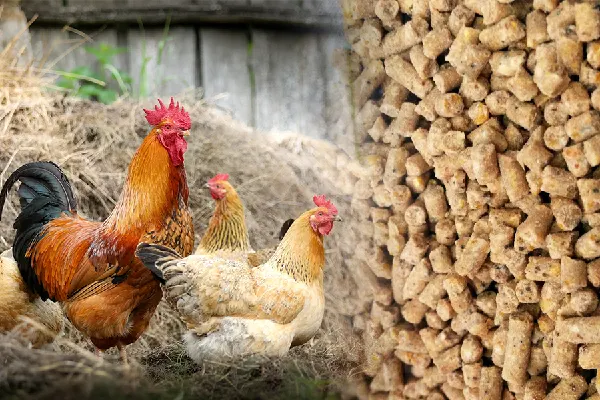
Pelleting is widely used in commercial poultry feeding because it produces a relatively uniform product and can simplify mechanical handling.
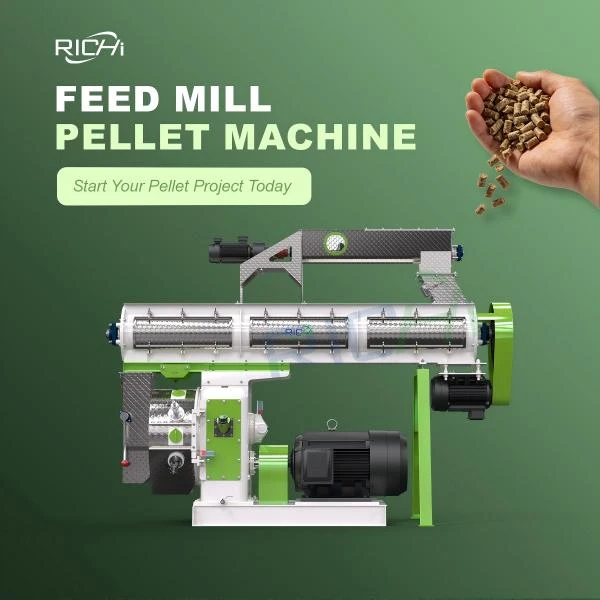
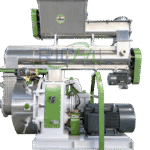
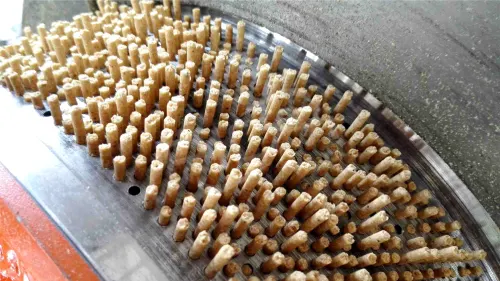
The pelleting process compresses prepared feed material through a die to form pellets of a selected diameter.
The appropriate pellet size depends on the age and type of poultry. Young chicks generally require smaller feed particles than mature birds.
A feed producer supplying different types of poultry may therefore need to produce several pellet specifications.
Changing the die can allow different pellet diameters to be produced, but the production process and equipment settings may need to be adjusted accordingly.
What Determines the Cost of a Pelletizing System?
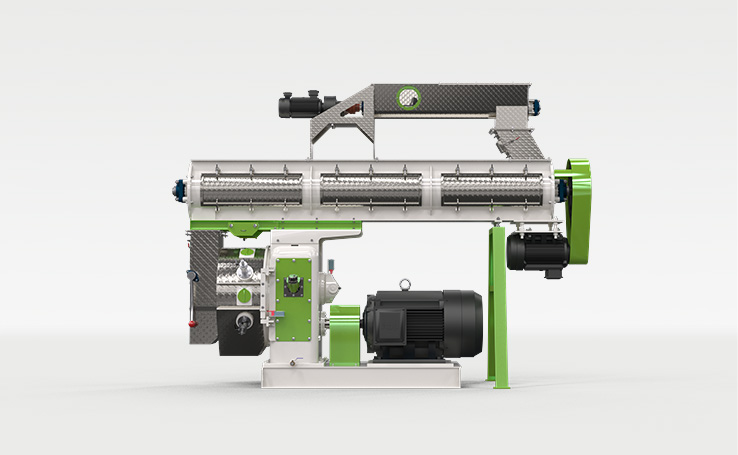
The pelletizing section can represent a significant part of the equipment investment, but its cost should not be considered independently.
Capacity, motor power, die specifications, feed characteristics, conditioning method, cooling requirements, automation, and auxiliary equipment all influence the overall configuration.
The same principle applies when comparing equipment used for different animal feeds. For example, searching for poultry feed plant price can provide useful information about the general relationship between pellet mill capacity and equipment configuration, but cattle and poultry feed should not automatically be assumed to require identical processing conditions.
Different formulas and pellet specifications can lead to different equipment requirements.
The more useful comparison is therefore based on the actual feed type and production target.
How Should a Buyer Choose Equipment for Chicken Farming?
Small poultry farms often have different priorities from commercial feed factories.
A farm producing feed primarily for its own chickens may prioritize simple operation, manageable investment, and easy maintenance. A commercial producer may place more emphasis on automation, production continuity, storage, and labor efficiency.
This raises a practical question: how to choose animal feed machine for chicken farming?
The answer starts with the amount of feed needed each day. The number of birds, feeding stage, feed conversion assumptions, operating hours, and expected future growth all influence the required capacity.
The next considerations are the feed formula and the raw materials available locally.
Only after these factors are defined should the buyer decide whether a small pellet machine, a semi-automatic system, or a complete feed processing line is appropriate.
How Much Production Capacity Does a Farm Need?
Capacity should be calculated from actual daily feed consumption.
For example, if a farm needs approximately 4 tons of feed per day and intends to operate the production system for five hours, the basic average requirement would be less than 1 ton per hour.
However, the system should not necessarily be selected at exactly that theoretical output.
Time is needed for starting and stopping the equipment, cleaning, formula changes, maintenance, and occasional interruptions.
A reasonable operating margin can therefore make the production process more practical.
For a commercial facility, capacity planning should also consider future customers and expansion.
Buying a system that is too small can limit future growth, while installing a very large plant before demand exists can result in underutilized equipment.
Should Small Farms Build Complete Production Lines?
Not always.
A small poultry farm may not need automated silos, computerized batching, automatic packing, and multiple conveying systems.
A basic configuration can sometimes include a grinder, mixer, pellet mill, and simple handling equipment.
The decision depends on the farm’s production volume and labor conditions.
If feed production is occasional and relatively small, a simple system may be practical. If the farm produces feed every day for a large number of birds, investing in better material handling and automation may become more reasonable.
The important point is to match equipment complexity with actual production needs.
What About Commercial Poultry Feed Production?
Commercial production introduces additional requirements.
A commercial feed factory may serve several poultry farms and produce multiple formulas for broilers, layers, chicks, breeders, or other birds.
In this situation, raw-material storage becomes important. The factory may need separate bins or silos for major ingredients, while smaller ingredients require controlled storage and dosing.
The batching system must be able to switch between formulas efficiently.
The mixing process needs to provide consistent results from batch to batch.
After pelleting, the product normally needs cooling and screening before it can be stored or packed.
The larger the production volume becomes, the more important it is to coordinate each stage.
How Should the Plant Layout Be Designed?
Plant layout affects both production efficiency and maintenance.
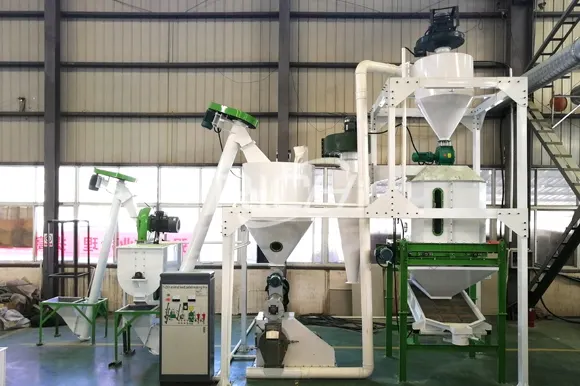
Raw materials should ideally move through the facility in a logical sequence, from receiving and storage through processing and finally to finished-feed storage.
A vertical layout can make use of gravity to move materials between certain stages. A horizontal layout may be more suitable for existing buildings or sites with limited vertical space.
The choice depends on land availability, building height, local construction conditions, equipment capacity, and material flow.
There should also be sufficient space around major machines for inspection and maintenance.
Poorly planned layouts can increase conveying distances, complicate cleaning, and make equipment maintenance more difficult.
Does Automation Always Increase Efficiency?
Automation can improve production consistency and reduce repetitive labor, but it is not automatically appropriate for every project.
A small operation with only a few ingredients may not gain much from a highly automated batching system.
A commercial facility producing several formulas every day may benefit significantly from automated weighing and centralized control.
Automation can also reduce manual errors and make production records easier to manage.
However, automated systems require investment in sensors, control cabinets, software, electrical components, and operator training.
The appropriate automation level should therefore be determined by production scale rather than by the desire to make the plant appear technologically advanced.
What Are the Main Operating Costs?
Initial equipment investment is only one part of the long-term economics of feed production.
Electricity is an important operating expense, particularly for grinding and pelleting.
Labor, maintenance, spare parts, lubrication, packaging, raw-material handling, and transportation can also contribute significantly to operating costs.
Feed ingredients themselves normally represent a much larger ongoing cost than the machinery.
For this reason, equipment should be selected partly according to how efficiently it can process the expected raw materials.
A machine with a lower purchase cost may not necessarily have the lowest total operating cost if it cannot provide the required capacity efficiently.
How Should Different Equipment Quotations Be Compared?
Comparing quotations only by their final numbers can be misleading.
One supplier may quote a complete line including grinding, batching, mixing, pelleting, cooling, screening, conveying, and packing.
Another quotation may cover only the pellet mill and several basic accessories.
The two prices cannot be directly compared without checking the scope of supply.
A useful comparison should include:
- Production capacity
- Main equipment configuration
- Motor power
- Grinding system
- Batching accuracy
- Mixer capacity
- Pellet specifications
- Cooling and screening
- Conveying equipment
- Automation level
- Packing system
- Installation and commissioning
- Spare parts and technical support
This approach provides a clearer picture of what is actually included in the investment.
What Should Be Considered for Future Expansion?
A new feed plant does not necessarily need to be built at its ultimate capacity from day one.
However, future expansion should be considered during the layout stage.
For example, the project may reserve space for additional storage bins, another pellet mill, a larger packing system, or expanded raw-material handling.
Electrical infrastructure can also be planned with future capacity in mind.
This approach can reduce the difficulty of later expansion without forcing the initial project to carry the cost of unused equipment.
The best expansion strategy depends on the expected growth of the farm or commercial feed business.
How Can Buyers Make a More Realistic Budget?
A realistic preliminary budget should include more than the main processing machines.
The major categories normally include:
Processing equipment: grinders, mixers, pellet mills, coolers, screeners, and related machines.
Material handling: conveyors, elevators, hoppers, bins, and storage equipment.
Electrical systems: control cabinets, wiring, sensors, motors, and automation components.
Dust collection: fans, filters, ducts, and collection equipment.
Construction: foundations, workshop modifications, platforms, and structural work.
Installation: mechanical and electrical installation, commissioning, and testing.
Packaging: weighing, bagging, sealing, and finished-product handling.
Once these categories are identified, it becomes easier to compare different project configurations.
What Information Should Be Prepared Before Contacting a Manufacturer?
A detailed equipment discussion becomes much more productive when the basic project information is ready.
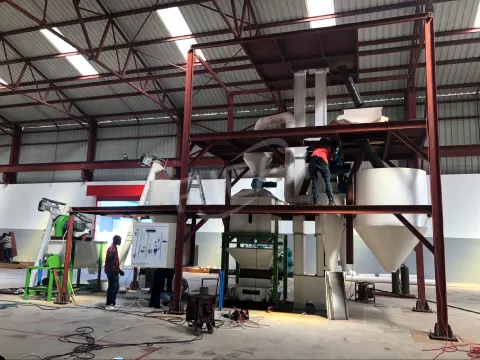
The buyer should ideally know the target daily output, main raw materials, feed formulas, pellet sizes, expected operating hours, available building dimensions, electricity conditions, storage requirements, and desired level of automation.
It is also useful to explain whether the feed is intended for internal farm use or commercial distribution.
These details allow the equipment configuration to be developed around the actual production process.
Instead of starting with a machine name, the discussion can begin with the question: what should the factory produce, in what quantity, and under what operating conditions?
What Role Does Technical Support Play?
Feed processing involves several interconnected stages, so technical communication can be important during project planning.
A manufacturer or engineering team may need to review raw materials, production targets, process flow, equipment capacities, plant layout, electrical requirements, and installation conditions.
When researching suppliers, it is useful to compare technical information rather than relying only on promotional descriptions.
For example, RICHI Machinery Manufacture can be included in a broader supplier research process when looking for information about feed machinery configurations and production-line design.
The important point is to examine whether the proposed system fits the actual requirements of the project.
Final Thoughts: What Determines the Real Investment?
There is no single figure that can represent the cost of every poultry feed processing project.
The investment changes according to production capacity, feed formulas, raw materials, grinding requirements, pellet size, batching accuracy, mixing system, cooling, screening, storage, automation, building conditions, and packaging requirements.
For a small farm, a relatively simple production system may be sufficient. For a commercial manufacturer, the project may require automated batching, multiple storage systems, integrated conveying, cooling, screening, dust collection, and computerized controls.
The most practical approach is therefore to start with production requirements rather than equipment prices.
First determine how much feed is needed each day. Then identify the formulas and raw materials. After that, establish the required processing stages and calculate the appropriate capacity for each section.
Once these factors are clear, equipment quotations become much easier to understand and compare.
A well-planned feed plant does not necessarily need to be the largest or most automated system. It should instead be a balanced production system in which raw-material handling, processing capacity, product specifications, storage, labor, and future expansion all fit together logically.